

Beyond the Brain: 5 Surprising Insights into the Ayurvedic Mind
Updated: May 6
Based on classes by Pandit Atul Krishna Das!
Do you ever feel "stuck in your head," looping through persistent anxieties or irrational fears that logic cannot seem to quiet? In our modern era, we are often conditioned to believe the mind is merely a byproduct of brain chemistry—a series of electrical impulses and neurotransmitters. However, ancient Vedic science offers a far more profound perspective.
As a Holistic Psychology Consultant and Ayurvedic Educator, I invite you to view the mind not as a physical organ, but as a multi-dimensional energy system. By understanding the mind (Manasa) as a subtle entity that bridges the gap between the eternal soul and the physical body, we unlock a revolutionary framework for mental balance.
The following five insights, rooted in the Vedas and Bhagavad Gita, redefine mental health from a Vedic perspective.
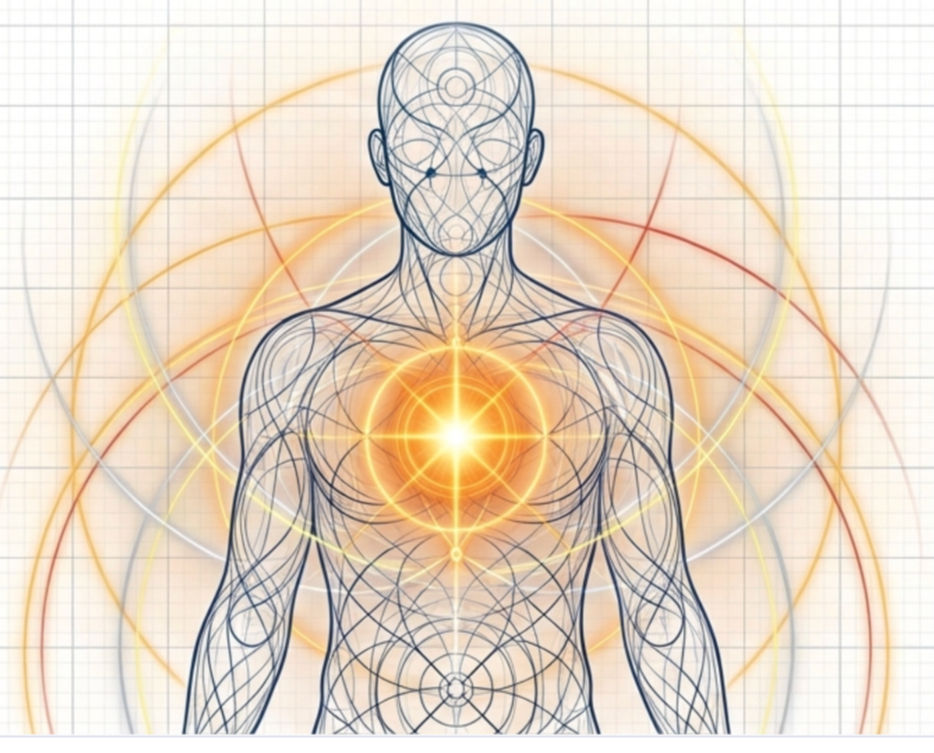
1. Your Mind and Consciousness reside in the Heart, but functions through the Brain
In Western neurobiology, the brain is the undisputed seat of the mind. Ayurveda offers a more nuanced, dual-centered placement: the root or seat of consciousness is the Heart, yet the mind functions through the Brain as its processing center.
The mind is not a stationary object; it pervades the entire body through specific channels known as śrotas:
Prāṇavaha Śrotas: These channels carry the vital life force (prāṇa). While centered in the head, they distribute energy throughout the entire being.
Manovāha Śrotas: These are the mental channels that carry thoughts, ideas, and emotions. Crucially, these channels are governed by Vata energy (the principle of movement).
This "full-body" view explains why psychological imbalances are often classified as Vata disorders. Emotional blockages—such as chronic fear or anxiety—physically obstruct the flow of prāṇa within these channels, leading to physical symptoms. To understand this hierarchy, we must recognize the mind's unique classification:
"Atindriya denotes 11th indriya... It is the control center of the rest of the five sense organs... Mind is only one but it performs various functions so rapidly that we feel it as if multiple minds are present."
As the "11th sense organ," the mind acts as the essential coordinator for both the five senses of perception (hearing, touch, sight, taste, smell) and the five organs of action. Without the mind’s presence, the senses collect data, but no knowledge is realized.
2. The "Chariot" Metaphor—The Struggle for Sovereignty
To illustrate the internal tension between our higher wisdom and our impulsive desires, Vedic psychology utilizes the metaphor of the Chariot. Each component of our being has a specific dharmic role:
The Ātmā (Soul): The passenger who owns the chariot.
The Buddhi (Intellect): The driver who must hold the reins.
The Manas (Mind): The reins used to guide the horses.
The Indriyas (Senses): The horses pulling the chariot into the world.
Central to this dynamic is Ahaṁkāra (the Ego). As the "first covering" of the Ātmā, the Ego connects the non-material soul to the material layers of existence. It is the Ego that provides the sense of "doing-ness," causing the Soul to feel as though it is the "enjoyer or sufferer" of the journey.
In a turbulent state, the horses (senses) run wild, and the mind (the reins) becomes so obstinate that it overcomes the driver (intellect). As Arjuna famously observes in the Bhagavad Gita:
"The mind is restless, turbulent, obstinate and very difficult to control and to subdue; I believe that it is more difficult than controlling the wind."
Wellness is achieved only when the Buddhi (Intellect) regains control, ensuring the senses do not lead the chariot off its intended path.
3. The Root of All Disease is Attachment (Raga)
A cornerstone of Ayurvedic pathology is the understanding that physical disease (Roga) begins with mental attachment (Raga). The Bhagavad Gita (2.62-63) details a precise 8-step Cycle of Mind that leads to the degradation of health:
Contemplation: Thinking about an object of the senses.
Attachment (Raga): Developing an affinity for that object.
Desire: The urgent craving to possess the object.
Anger: Arising when desires are frustrated or unfulfilled.
Delusion: The loss of clarity and perspective.
Forgetfulness: The bewilderment of memory.
Loss of Intelligence: The destruction of the Buddhi (logic and consequence).
Total Ruin: When intelligence is gone, the individual loses everything.
To address the root cause of affliction, we must address the greed and jealousy that cloud the mind. This is beautifully summarized in the primary invocation of the Astanga Hrdyam:
"I give my obeisances to Lord Dhanavantari, the topmost healer, who destroys the rogas related to Raga (Greed, Lust, Anger, Jealousy, intoxication with life, power, money, beauty, etc.), that continually afflicting the mind, giving rise to disease, delusion, and restlessness."
5. Your Subconscious Is a Library of Samskaras
Why do we experience irrational fears or inexplicable attractions to certain life paths? Ayurveda explains this through Samskaras—deep-seated impressions stored in the subconscious.
While we begin each life with a fresh set of active memories, we carry the "old conditioning" of previous lives within our subtle body. These are not specific memories of events, but rather a library of tendencies and traits that travel with the Ātmā from one physical body to the next.
Yoga and meditation act as a profound cleansing process for these impressions. However, there is a crucial distinction in Vedic meditation: it is compared to a shower. Meditation is the act of "turning on the water" to wash away the "mud" of old Samskaras. Yet, the texts warn that meditation without a connection to the Divine is like standing in a shower without turning on the tap—it remains a "dry" exercise that cannot truly purify the depths of the subconscious.
Conclusion: A New Dimension of Wellness
Ayurveda teaches that a human being is a sacred synergy of three dimensions: Manas (Mind), Ātmā (Soul), and Śarira (Physical Body). True health is not merely the absence of physical symptoms, but the dynamic harmony of these three layers.
If our mind is a sponge, what "water" are you immersing yourself in today?
A final thought to consider: If your intellect is the driver of your life's chariot, are you giving it the directions, or are the horses of your senses leading you off the path?


Comments