





The Fire Within: Why Your Body is Burning (and How Ayurveda Cools the Flame)
Have you ever felt a phantom warmth radiating from your palms, a stinging sensation in your eyes, or a persistent, localized heat in your stomach that refuses to subside? Or, perhaps you suffered from mild heartburn after a meal. This internal heat is often ignored or dismissed as a minor annoyance, yet it serves as a critical distress signal from your body.
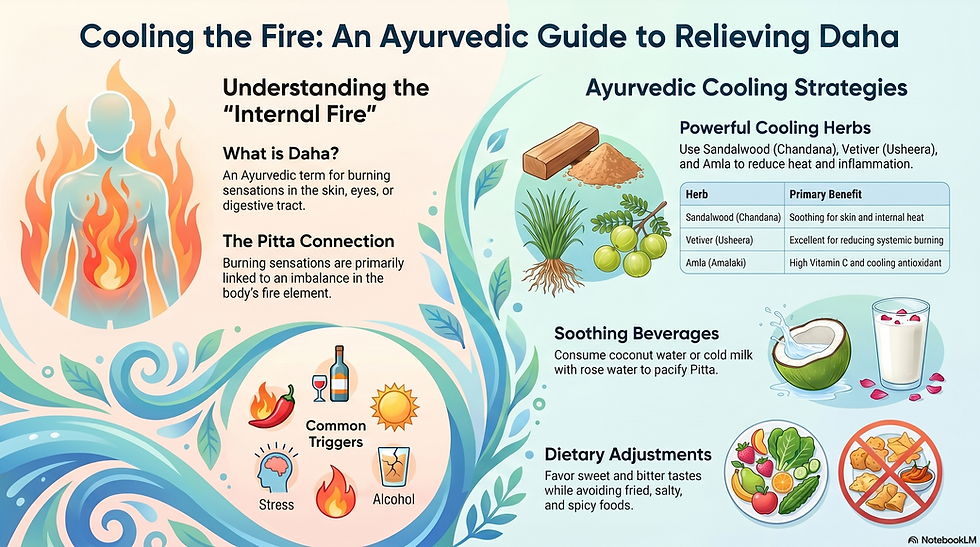
In the ancient tradition of Ayurveda, this burning sensation is known as Daha (pronounced "da" as in dart, and "uh-uh"). This isn't merely a physical discomfort; it is a profound indication of an imbalance in the Pitta dosha—the vital fire element responsible for our metabolism, digestion, and internal temperature regulation.
Takeaway 1: It’s Not Just Heartburn—The Many Faces of "Daha"
While modern medicine often compartmentalizes a burning sensation as a localized issue like heartburn, Ayurveda recognizes Daha as a systemic fire that can migrate throughout the body. This "invisible heat" often manifests in surprising locations, catching many off guard who view these symptoms as unrelated quirks of health.
Ayurveda identifies that Daha commonly surfaces in these areas:
The palms of the hands and the soles of the feet (specifically known as padadaha).
The eyes and the mucous membranes of the mouth.
The stomach, the urinary tract (manifesting as burning urination), and the digestive tract during bowel movements.
The skin appears as inflammation, redness, or the sting of a sunburn.
This holistic view shifts the focus from the individual symptom to the underlying source. Whether the heat is felt in the feet as padadaha or in the chest as Amlapitta (hyperacidity), the root cause remains an aggravated fire element that demands immediate cooling.
Takeaway 2: Your Emotions and Environment Are Fueling the Fire
The internal fire of Pitta does not ignite in a vacuum; it is fed by our daily choices and the world around us. Consuming an excess of spicy, sour, salty, or hot foods—as well as alcohol—acts as direct kindling for the body's internal furnace.
Environmental factors like prolonged sun exposure or heat stroke play a significant role, but our internal landscape is just as influential. Stress and anger are potent triggers that sharpen the body's heat, turning a mild warmth into a raging fire. As the classical texts suggest:
"Symptoms often include heat, redness, thirst, irritability, or a feeling of internal fire."
The link between anger and physical heat is a crucial insight for modern stress management. When we experience irritability, we are feeling the literal "burn" of our emotions, which can manifest physically as inflammation or dehydration.
Takeaway 3: The Secret of "Sheeta Veerya" (Cooling Potency)
To extinguish this internal flame, Ayurveda utilizes the fundamental principle of sheeta veerya, or cooling potency. Rather than simply masking the heat, the goal is to introduce substances and tastes that naturally pacify Pitta and restore a balanced internal climate.
Classical herbs used to achieve this include:
Chandana (Sandalwood): Provides essential cooling and soothing effects for both skin and internal heat.
Usheera (Vetiver): Renowned for its excellent ability to reduce intense burning sensations.
Shatavari (Asparagus racemosus): A nourishing herb that helps pacify aggravated Pitta while restoring moisture.
Amalaki (Indian gooseberry): A powerful antioxidant rich in Vitamin C that provides deep, systemic cooling.
Choosing the right tastes is equally important and often feels counterintuitive to the modern palate. While you might crave salty snacks when dehydrated, salt and sour flavors actually act as accelerants to the Pitta fire. Bitters and sweets—often avoided in the modern diet—are the true "fire extinguishers," working to dampen the internal temperature from the inside out.
Takeaway 4: High-Tech Healing with Low-Tech Ingredients
The most effective tools for cooling the body are not found in a laboratory, but in the simplicity of nature and your own kitchen. You do not need complex technology to address an aggravated Pitta; you need specific, hydrating, and soothing remedies.
Cooling Beverages:
Coconut Water: Consuming 100–500 ml twice daily is a highly effective, nature-made hydrating measure.
Cold Milk: Often mixed with rose water to enhance its innate cooling benefits.
Buttermilk (takra): A specific mixture of buttermilk blended with parched rice powder and a small amount of jaggery.
Infusions: Cold infusions of Chandana, Usheera, or simple mint and fennel tea.
External Applications:
Sandalwood Paste or Coconut Oil: Applied directly to the skin or affected areas to pull heat from the surface.
Shatadhauta Ghrita: This "washed ghee" is a specialized preparation used specifically to soothe intense skin burning.
These accessible remedies emphasize that the most powerful "anti-fire" tools are often the most humble. By focusing on hydration and the application of cooling fats like ghee and Coconut Oil, we can effectively soothe the most stubborn internal heat.
Conclusion: Reclaiming Your Cool
Addressing the root cause of your internal heat—the Pitta imbalance—is essential for long-term vitality. By shifting your diet, managing your emotional stressors, and utilizing cooling herbs, you can move beyond simply masking symptoms and begin to regulate your body's "internal climate."
Disclaimer: Ayurveda and its practitioners are not allowed to treat, cure, or prevent a disease and are not recognized by the FDA. Please contact your physician for any health issues. The information in this article is for educational purposes only.
As you move through your day, take a moment to assess your own internal climate. Are you fueling a fire that needs to be cooled, or are you practicing the rituals of balance that restore your natural calm?
Book a Consultation


Comments